Wagoner County
These photos show what happens when, because of managerial incompetence and misuse of resources, neglect is allowed to rule unchecked and what uncorrected abuse (yes, abuse and not normal wear) can do to a bridge. The rust damage is confined to the deck along the north side of the west span.
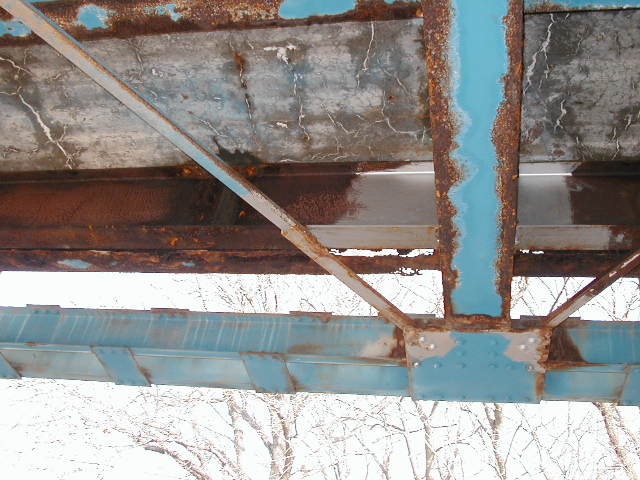
Above, a view of a deck stringer where it attaches to the cross beam. The stringer is so rotten, that it had to be doubled. This problem is probably the result of heavy winter salting and water damage to the concrete deck. You can see the white deposits around the cracks in the concrete.
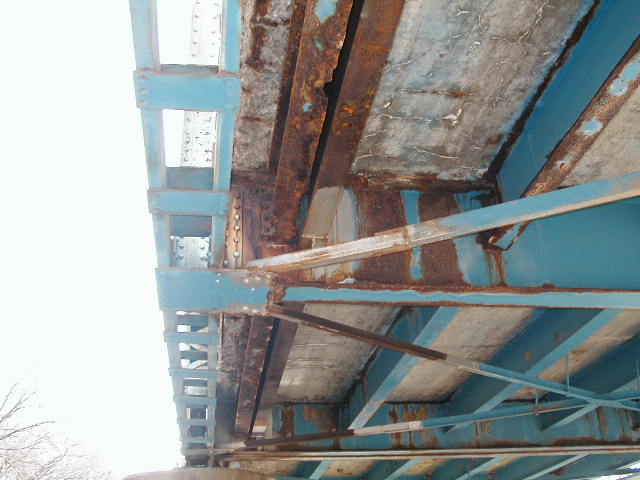
Above, the stringer, looking at the connection to the cross beam. The built-up member to the left is the lower chord of the truss itself. The trusses are completely undamaged, and the damage is confined to the deck (flooring) system.
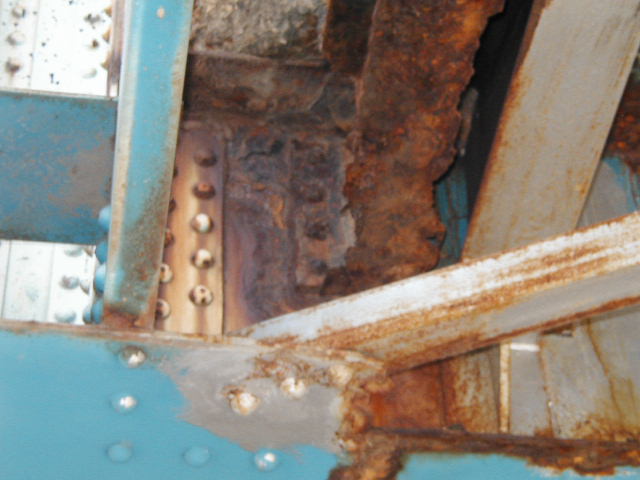
Above, a close up of the connection. The new stringer has been welded in.
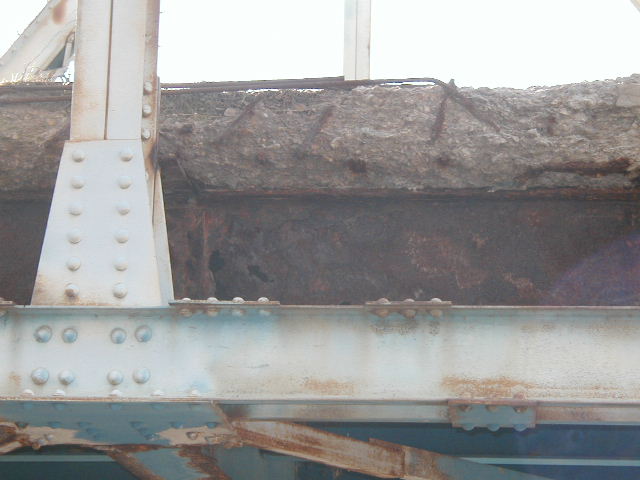
Above, a side view of the stringer, lower chord and curb. Note the condition of the curb, with much of the rebar exposed.
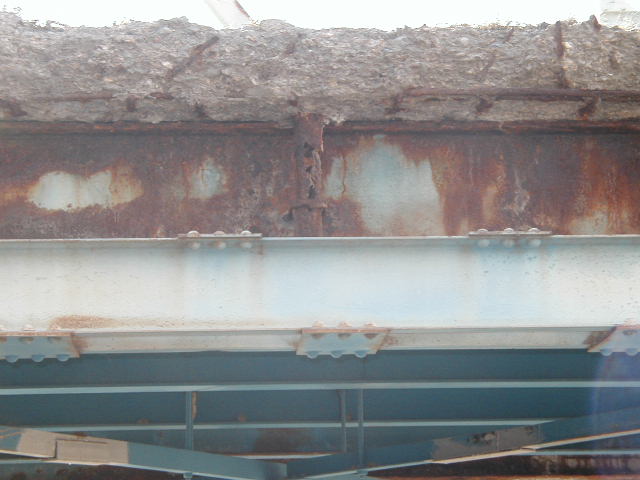
Above, a drain pipe, with a gash eaten into its side. At this point, there is no curb. The bridge should have been re-decked when the repairs were made.
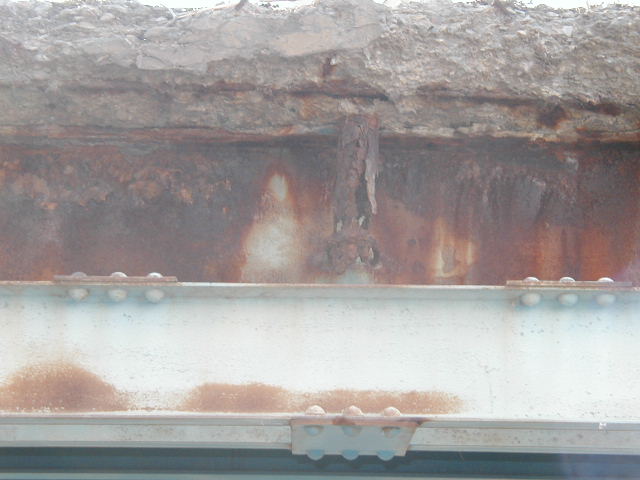
Above, this drain pipe is in worse condition than the one previous.
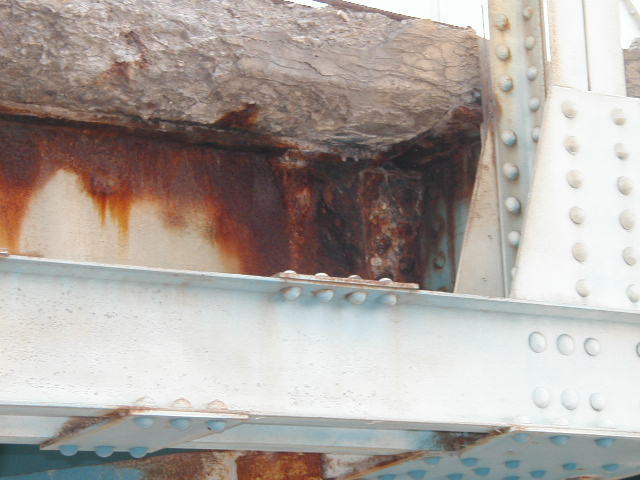
Above, flakey, crumbling concrete near the floor beam that connects to the hip vertical. On old bridges, such as this, the concrete is perhaps the most easily damaged.
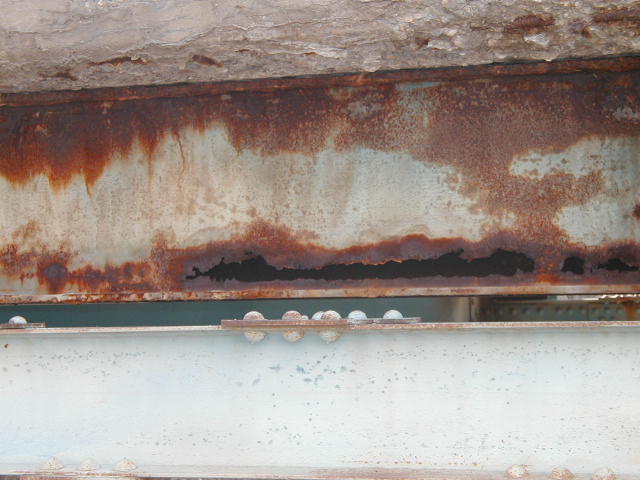
Above, large slots rusted into a stringer just above the flange.
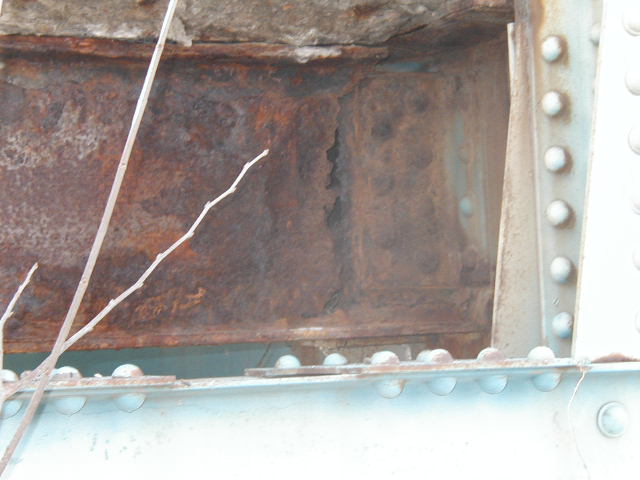
Above, stringers are connected to the cross beams by an angle riveted to the web. Here, the web is completely rusted away near the connecting angle.
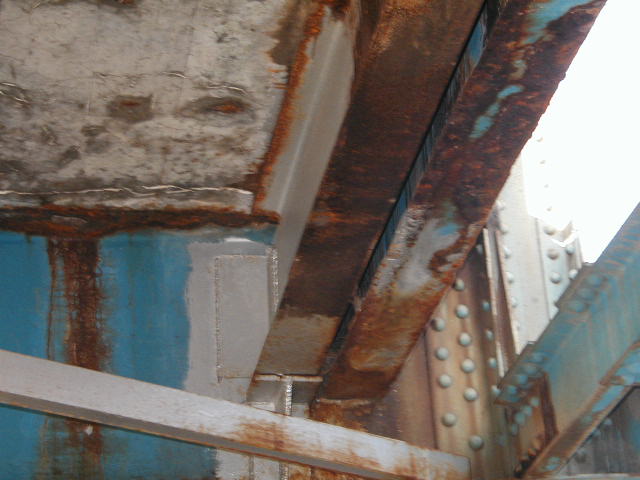
Above, a new stringer welded in along side the rotted original.
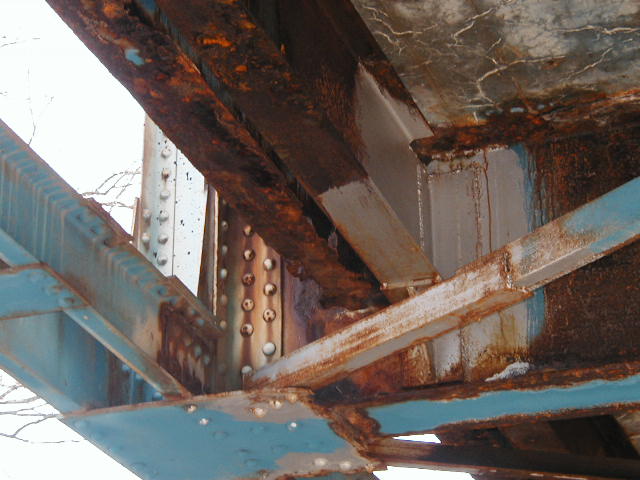
Above, another connection. Note that the flange on the original stringer is rotted away also.
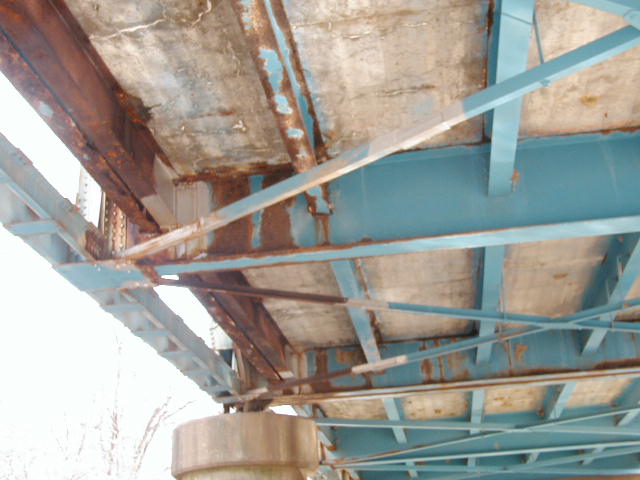
Above, A showing two panels of doubled stringers.
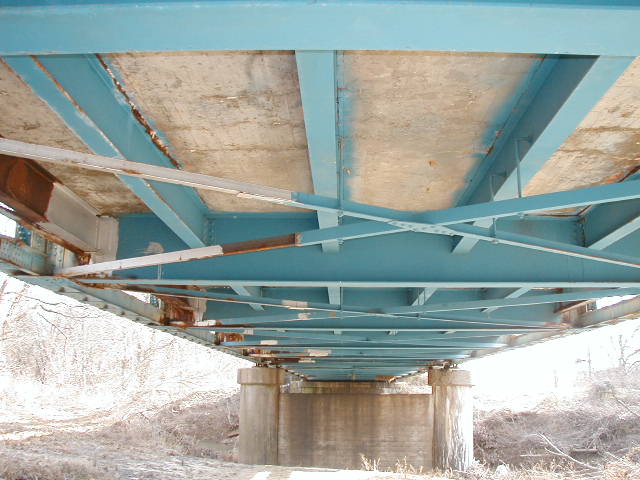
Above, overview of the west span's underside. Six lines of stringers make up the secondary system of steelwork. The primary system is the cross beams going from one side of the bridge to the other. The diagonals are for wind loads.
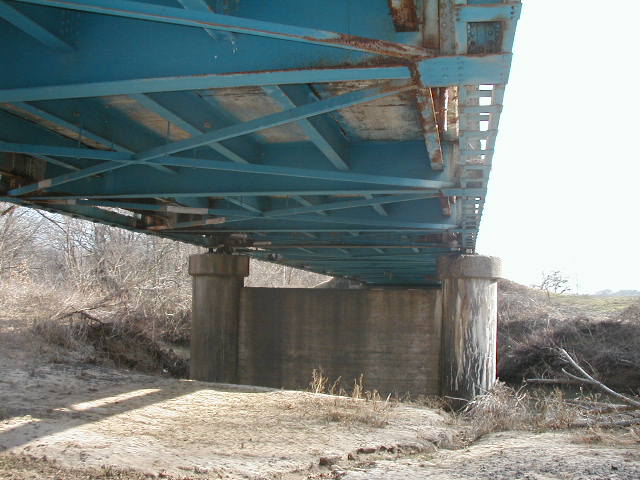
Above, damage along the south side is very much less severe.
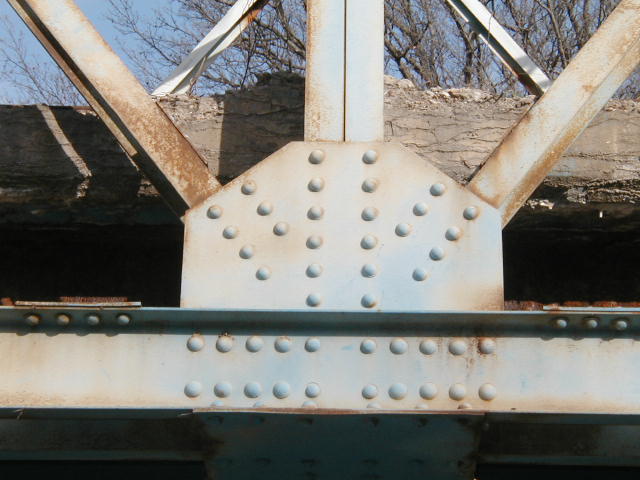
Above, connection at middle of bridge. Here, the center post meets the lower chord, along with two tension diagonals.
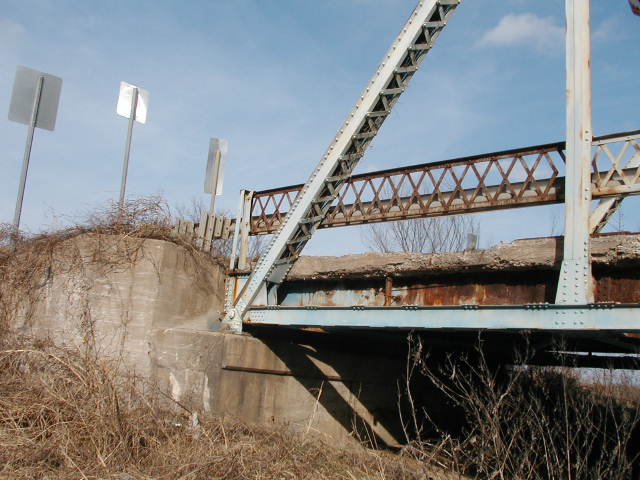
Above, detail of lower portion of the end panel. Clearly visible are the connections of the endpost to the lower chord, and the hip vertical to the lower chord.
What you have seen here has not been just another "rusty old bridge." We have seen a lot of bridges, many older than this one that do not have rust covering the undersides. The problem is that maintenance has been lacking. Neglect has taken its toll. Even the repairs are starting to decay.
What then, is the point in giving the state DOT more money (and raising taxes further) to build and maintain bridges if they are not going to maintain them? A new bridge, if not kept up, will also waste away. Modern structures will also be much less forgiving and less repairable than this bridge was. This kind of workmanship and resource management should be demonstrating to the public that the DOT is incompetent and should be held accountable for wasting our money.
Back to Oklahoma Bridges.